Sunday, January 08, 2006

Yardbird War

The draw down of submarine construction and repair work and the Brac decision to keep Portsmouth Naval Shipyard (PNS) open has created an interesting fight between shipyards. The not hiring and maybe firing of shipyard workers or (Yardbirds), from Seacoastonline.com Yard banned from hiring more workers excerpt:

PORTSMOUTH - The Navy has placed a hiring freeze on Portsmouth Naval Shipyard, according to shipyard union president Paul O'Connor.

O'Connor said the freeze was put into effect last month after lawmakers from Connecticut had a "knee-jerk" reaction to the news that Portsmouth would receive a $59 million contract that was originally scheduled to go to the privately owned Electric Boat in Groton, Conn.

The contract in question is for the scheduled overhaul of the USS Philadelphia (SSN-690).

Electric Boat (EB) had announced the layoff of 150 workers and PNS the need for 330 more workers just prior to the Philadelphia's overhaul work being shifted to PNS. Subsequently EB in the beginning of December announced that as many as 2,400 jobs could be cut in 2006 due to the loss of repair work and the Navy's procurement of only one Virginia Class submarine per year in the foreseeable future.

Add to the above, the fight that has been churning over the ASDS program and you just hit the equivalent of a east coast shipbuilders trifecta including the Navy PNS yard, Electric Boat and a smaller Northrop Grumman contract.

The yardbirds are fighting over the crumbs (overhaul work and not new construction) compared to the cold war shipyard boom times. I still feel that the capacity and experience offered by PNS is still a valuable asset to our national defense. However, when you build one type product for only one customer the lean times can kill the complacent. Look for any other shifts in contracts relating to submarine overhaul and repair to meet with lots of resistance that probably wouldn't have been there 20 years ago.

Update 01/10/06 20:00 - Looks like EB is now getting a slice of Northrop Grumman's work on the USS Texas - Electric Boat Wins $85 Million Contract for Sub Work (hat tip: TheSubReport). Could this be to quite the noise generated from the above stated contacts or just that they're doing good work now a days as Bubblehead has cited recently?

Friday, January 06, 2006

Unauthorized Absence from Blogosphere

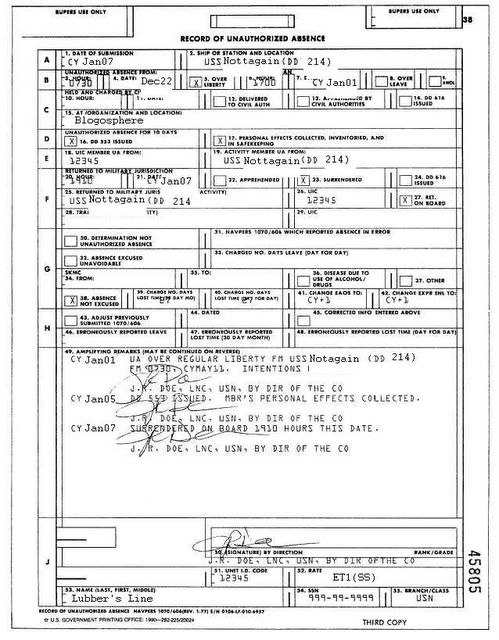
I've turned myself in, been UA from the blog for 17 days.

A Weaponette was checking up on me and I was afraid the Snipes and 'O' Gangers were next. I'm not a "Admin Warfare Specialist" so hopefully I filled out the proper paperwork below and can get back to blog duty soon.

Unauthorized Absence (click on form for a larger version)

The reason for the absence is not that I "float tested" my PC or anything. Just been going through a change of command at work (Corporate Merger) and decommissioning of my office (Layoff). Not to worry though, I was asked to "ship over" to the new command but decided to go TAD (Contracting) instead. I guess there's too many "strikers" left and they need this former NavET to keep her in the channel.

OK, that was my Navy slang attempt to sound like a "Sea lawyer": an argumentative, cantankerous or know-it-all former sailor.

Thanks for checking up on me and I'll be back posting soon. - LL

Thursday, December 22, 2005

Navy Payments for Katrina Loss Questioned

From the Washington Post - Navy Payments for Katrina Loss Questioned

WASHINGTON -- A Navy plan to pay Gulf Coast shipbuilders about $1.7 billion for losses related to damages and construction delays from Hurricane Katrina may overstate the actual costs and could dampen efforts to collect insurance payments, according to a Congressional report.

The nonpartisan Congressional Research Service said Northrop Grumman may be able to collect insurance claims for future increased costs related to labor and overhead. If the government pays now, the report said, the company will have little incentive to negotiate with insurers for those payments.

The Northrop Grumman shipyards in question seem to include those with a recent record of poor performance as I noted here and CDR. Salamander noted here and here. The amounts requested appear to have been all over the place - from the same article:

Navy Assistant Secretary John Young initially requested $2.7 billion to restore the shipyards, replace lost material and get workers back on the job. The Pentagon later asked for a total of $6.6 billion, including $2 billion for shipbuilding. Congress cut the Defense Department funding back to about $5.8 billion in the bill.

The congressional researchers took issue with the Navy's argument that the money is needed immediately, and suggested the government should wait for more accurate cost estimates. Delaying the request, the report said, could also allow insurance negotiations to proceed.

Could the billions requested be to prop up failed shipyards and shipbuilding programs in the form of economic relief that insurance will pay a fair portion of anyway?

Monday, December 19, 2005

Arctic Oil and Submarines

From The Stamford Advocate - Conn. defense funds stalled by Senate's Arctic oil fight

WASHINGTON -- Billions of dollars in federal funds targeted for Connecticut defense firms will sit in limbo as the Senate wrestles over the contentious issue of Arctic oil drilling.

Democrats, including Sen. Joe Lieberman of Connecticut, are threatening to filibuster the defense appropriations bill as Congress rushes to finish its work before Christmas. They object to language added to the bill by Republicans that would open Alaska's Arctic National Wildlife Refuge to oil drilling.

Connecticut Democrat lawmakers are in a difficult position, do they unite behind their party and filibuster the $453 billion military spending bill over an Arctic oil drilling provision, or let it pass in favor of their Connecticut constituents in the defense industries.

Both CT Democrat Senators Joe Lieberman and Christopher Dodd spoke out against the ANWR oil drilling provision in the current defense bill. Whereas, Republican Rep. Rob Simmons said this about the defense bill "The bill provides some relief for the unique work force at Electric Boat. I will continue to work in Congress to ensure that good-paying shipbuilding jobs remain in Connecticut." Simmons district includes the Electric Boat Groton shipyard.

In the bill Electric Boat would receive $2.5 billion for an additional Virginia Class nuclear attack submarine and $15 million for the design of a new attack submarine. Electric Boat had recently announced a planned layoff of 2,400 shipyard workers in 2006.

Perhaps if we started purchasing diesel submarines from Europe Lieberman and Dodd could find their way to backing the ANWR provision. Although I don't think ANWR oil drilling belongs in a defense bill I do believe we need a better energy policy than the current no new drilling, no new refinery environmentalist lock. Speaking of energy, the defense bill also includes $3.75 million for Fuel Cell Energy in Danbury CT to develop a molten carbon clean fuel cell generator.

Update 12/20/05: Rhode Island lawmakers add their disapproval to the Defense bill's ANWR provision with Sen. Jack Reed (D) saying "It is a cynical gesture that has delayed approval of this important bill". The bill is important because R.I. firms could gain more than $50 million in the defense bill so I suspect the RI lawmakers to approve the spending bill despite their complaints.

Update 12/21/05: Sen. Ted Stevens (R- Alaska) lost his bid to attach ANWR oil drilling provision to the Defense bill.

Wednesday, December 14, 2005

Sumatra tsunami of Dec 2004 legacy

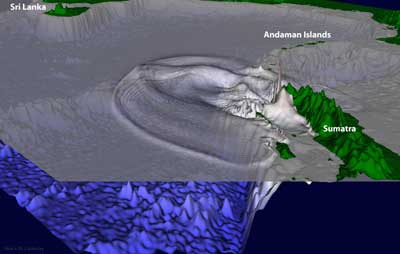
Submersible surveys of the ocean floor where the December 2004 Sumatra tsunami originated show it is devoid of life.

Sumatra Tsunami (Graphic Source: USGS)

From the Sydney Morning Herald "Shocked scientists find tsunami legacy: a dead sea"

A "DEAD zone" devoid of life has been discovered at the epicentre of last year's tsunami four kilometres beneath the surface of the Indian Ocean.

Scientists taking part in a worldwide marine survey made an 11-hour dive at the site five months after the disaster.

They were shocked to find no sign of life around the epicentre, which opened up a 1000-metre chasm on the ocean floor.

Instead, there was nothing but eerie emptiness. The powerful lights of the scientists' submersible vehicle, piercing through the darkness, showed no trace of anything living.


The south Asian tsunami claimed more than 270,000 lives and created one of the largest relief efforts in recent history. A year later, the "fast acting" UN is having its second meeting on setting up a regional tsunami warning system. Gallery of tsunami photo can be found here.

Some scientists think that a US east coast mega tsunami is possible. Maybe someday the US eastern seaboard could its own tsunami warning system.

Sunday, December 11, 2005

Submariner Santa (SS) - Update

I 've received a few emails on my previous post about Santa wearing Dolphins and being Qualified in Submarines so I decided to provide an update. This update may raise more questions than it answers.

I started the previous post by saying that it was the USS Charlotte's (SSN 766) recent visit to the North Pole that had me wondering "Does Santa wear Dolphins". One proud parent of an SSN766 crew member had this to say in an email to me:

"My son went to the North Pole on the Charlotte. I asked him about Santa, but all he would tell me was "Loose lips sink ships." I could tell from the tone of his voice, he saw something. Maybe some day it will be declassified, and he can tell me all about it. "

I hope this person doesn't mind I quoted their email but it appears Santa has some sort of "need to know" clearance and may be working on an upcoming operation (NORAD video link). It appears submarine sailors know something but are keeping it silent while others service members aren't so silent.

Additional pictorial evidence of Submariner Santa or Mr. (SS) has shown up in my email box as well.

Santa has silver Dolphins?

This new evidence has raised a bit of a controversy. It appears Santa's Dolphins are silver making him a "white hat" enlisted type although some may question this observation. This doesn't reflect poorly on those who wear gold dolphins, it just means Santa has a sense of humor about his own chain of command. Why else would he send his helpers to Santa's North Pole Academy which even has a Moscow branch. We all know that Academy graduates qualified in submarines usually wear the gold Dolphins.

There you have it a Secret Santa who may wear silver dolphins and not gold. To steal a line "we present the facts you decide".

Happy Holidays - LL

Friday, December 09, 2005

Does Santa wear Dolphins?

A recent photo I saw at TheSubReport of the USS Charlotte (SSN 766) at the North Pole combined with the approaching holidays has got me wondering; “Does Santa wear Dolphins?”.

Using Lubber’s Line investigative tools, google, beer and memory, I decided to document my suspicions. The accumulative evidence is overwhelming:

First take the coincidence of names, there is a Submarine named the SANTA Fe (SSN 763) and a famous Submarine harbor in Guam located in the village of SANTA Rita. Could these names be in honor of that golly old elf?


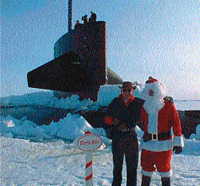
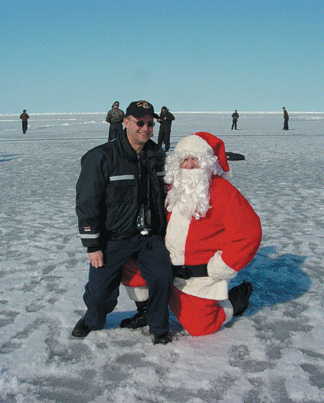
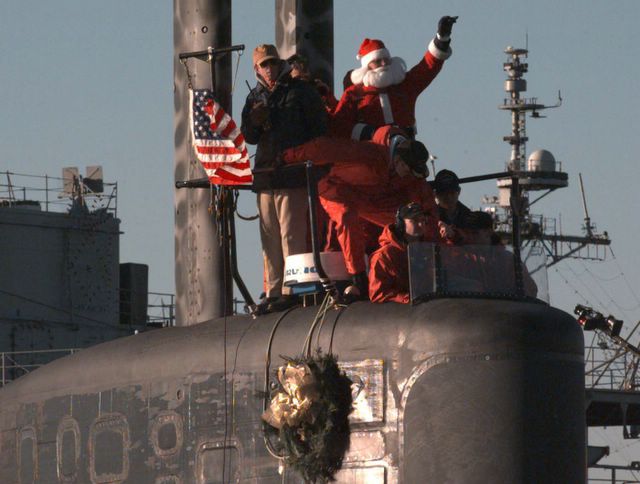
Second is the fact that submarines are constantly visiting the North Pole and are sometimes greeted by St. Nick himself. The pictorial evidence (Photos Source: US Navy) below is ill refutable.

Santa Greeting the USS Hawkbill (SSN 666)


Navigator of the USS Connecticut (SSN 21) asking Santa for a new gyrocompass.
(Elves can be seen in background)

Santa Claus was the first to celebrate the arrival at the North Pole of the NAUTILUS and there has even been foreign news reports of other Subs visiting Santa.

Occasionally Santa will return the favor, come down from the northern latitudes, and visit his bubblehead friends. Although in some cases he should get the proper clearances first.

Not to miss a good sale Santa hitches a ride on one.

Submariner's even write poetry about Santa visits.

Then there are those unique Santa attributes:
Never heard or seen, in the dead of night he uses stealth to deliver his payload.
He can climb up bridge trunk or the inside of a chimney with ease.
He is rarely seen out of uniform with spit shined boots and a distinctive red poopy suit.
Mid-rats seems to be his favorite meal.
His year is filled with intel ops, checking on naughty and nice activities.
If you shave his beard and give him a crew cut he looks like the COB.

At the end of year the elves get grumpy and overworked in preparation of a ritual they've nicknamed ORSE (Old Red Suit's Excursion) or the alternate TRE (Tree Receptacles Evolution).

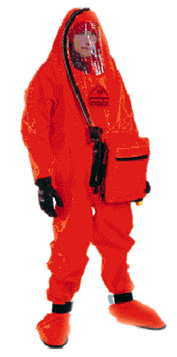
But the true clincher for me was the fact that submarine escape training required you to learn the Santa song and sing Ho, Ho, Ho all the way to the surface.

Santa's new red submersible safety suit (Ho, Ho, Ho)

I hope all this evidence is convincing because, some day, when my young son asks me the inevitable question, "Dad is there really a Santa?" being honest I'll have to say:

"I can nether confirm or deign the existence of Santa, but if he is real, I think he wears Dolphins".

Thursday, December 08, 2005

Dec 7, 1941 - A Submariner's Response

After the Imperial Japanese bombing of Pearl Harbor on Dec 7, 1941 the United States was at a loss on how to retaliate. For months the American Navy was on the defensive and reeling from the loss of so many of it's capital ships.

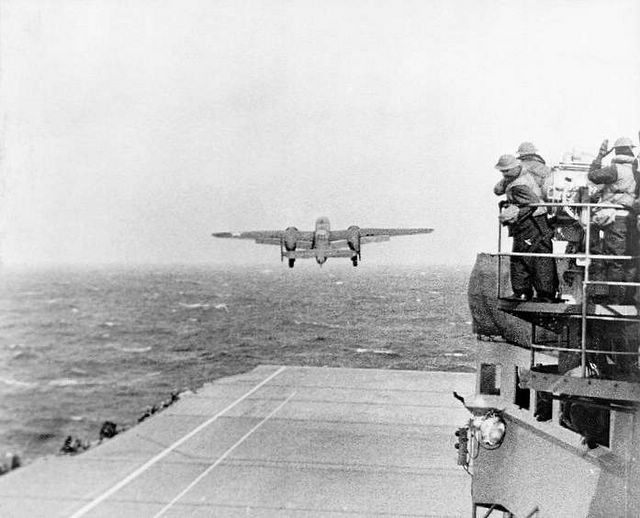
Over four months later on April 18, 1942 the response came in the form of the Doolittle Raid on Tokyo.

USS Hornet launch of B-25 for the Doolittle Raid on Tokyo

It was an WWI submariner Capt. Francis S. Low (former commander of the S-12) who conceived of the idea to takeoff heavily laden bombers from the deck of an aircraft carrier. Captain Low got the idea a month after Pearl Harbor, when he saw Army bombers perform simulated bomb runs over the outline of a carrier deck painted on a runway. An example of intuition and creative thinking by a submariner.

An Army bomber flown off a Navy carrier conceived by a pig boat sailor and executed three months after the idea is presented, now that's innovative warfighting.

Tuesday, December 06, 2005

Between Two Worlds – Surface/Submerged

Because of a corporate merger, I have been away from the blog for a week on a business trip teaching my replacements at the new main office in Minnesota. Approaching unemployment had me feeling a little introspective about career changing events and I remembered two minor events in my service on submarines that shaped my feelings about being at sea. I thought I would share some these personal contradictions.

Surfaced heading for the deep:

A person at sea can feel insignificant or small compared to the vastness of the ocean’s expanse and depths. I had such a feeling aboard the USS Alabama SSBN 731 on a cold and clear midwinter’s night in 1985.

We were somewhere near the end of a progression of builder’s trials before commissioning, at sea, on the surface and off the Southern New England coast. Having just come off watch I requested permission to go to the bridge for some air. With permission granted, I climbed up to the bridge and into a different world.

On the Bridge, the temperature was significantly colder than down below in the control room. The below freezing temps weren’t uncomfortable but invigorating after a long maneuvering watch on the Radar and ESM. Once topside I scanned the horizon west of us for the fishing trawlers I had tracked while on watch earlier. We had passed a small group of trawlers around the 50+ fathom curve, probably fishing the moraines and ledges that run for miles out beyond Block Island. The only sign I could see was a single white masthead light flickering out of sight as we moved away and further towards our dive point.

It was a nearly clear moonless night and the canopy of stars seemed to stretch to infinity. It’s hard to describe the extent of the night sky when there’s no city or street lights to obscure or diminish the view, but if you have ever been far out at sea or in the wilderness at night you know what I mean. The only other light source outside the ship was the blue-green glow of millions of bioluminescent sea creatures disturbed by the boat’s movement through the ocean. A glowing greenish frothing wake trailed off behind us in a gentle arch towards the western horizon. Occasionally the bow pressure wave would produce miniature flashes as the ships motion forward excited these dinoflagellates.

Other than orders here wasn’t much conversation going on between the bridge watch standers. Everyone seemed to be just taking it all in.

What struck me was the contrast, in one moment I could step back into the cold, feel small, and alone surrounded by the vastness of the ocean and night sky. The next I could move over the bridge trunk, feel the warm air rising up, hear my shipmates busy below and feel the power of the ship pushing through the sea. A cocoon of steel and technology soon to disappear into the depths of the cold vastness of the sea.

At that moment, I was a lifer ready to sign the re-enlistment papers for another hitch.


Submerged looking to the surface:

I heard that the Navy did a study a while back and found that colors or the lack of can have an effect on an individuals mood and mental state. From personal experience, I felt that was true even before I heard of the study.

On the Trident boats, we had lots of colors, different decks and passageways had different colored paneling, orange, blue, green, red. Not so on the old 640 class boomers. My first boat had basically two colors battleship gray for the equipment and a tan color they called mushroom on almost everything else.

Towards the end of a routine and boring boomer patrol we were having our weekly 4 hour field day. I had just finished cleaning behind the BCP, cleanest cableways on the boat, and was getting ready to secure from field day when I realized both scopes were still up. The quartermasters had for some reason decided to clean the bottom of the periscope wells that field day.

We were doing about four knots submerged with the scopes still completely underwater. I decided to take a quick periscope liberty before going down to the mess decks for lunch. After getting permission from the Officer of the Deck I stepped up to the scope and looked out into the underwater world.

There wasn’t much to see, far from land it was a sunny midday somewhere in the warmer reaches of the Atlantic and the water was crystal clear. I aimed the periscope elevation as high as it would go and peered at a translucent surface of brilliant blue. It reminded me of lying at the bottom of a swimming pool as a kid and looking skyward.

Then pointing the scope aft I slowly panned the elevation down toward the missile deck. The colors progressively went from bright blue to blue-green to blue to deep blue and eventually pitch black. Where the missile deck and aft end of the sub should have been was blackness, I couldn’t see the submarine.

From my two-minute periscope liberty, the sense of blackness where I existed and the brilliant color and light of the surface made me aware that making patrols had an effect on me that I had not anticipated. After four patrols I did a split sea tour to new construction for a change of pace less routine and more daylight.

Changing Course:

Both experiences, although not profound, in some way affected me. I always seek some form of adventure but suspect that what may seem routine to me may not be ordinary.

Thanks for reading my self-indulgent posting. -LL

Sunday, November 27, 2005

Rigging for Quite

I 'll be traveling on business this week so the blog will be quite with no posting for about that time.

Speaking of sound and silence, is the photo below of the first Sonarmen in training?

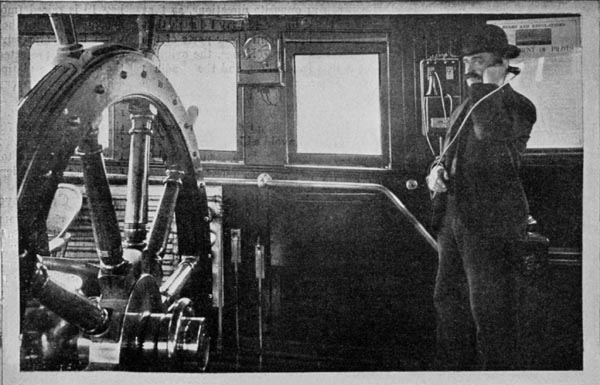
Fessenden Submarine Oscillator (Source: NOAA)

In 1914 the Fessenden Oscillator was invented by Dr. Reginald Fessenden of the Submarine Signal Company in order to communicate between ships and between ships and shore facilities. The above photo is demonstrating a listening device, very similar to a telephone, used on board ships as part of Dr. Fessenden's system.

Additionally if your interested in doing some sonar watchstanding check out the following quick google of links:

NOAA Vents program Acoustic Monitoring.

Whale Acoustics research company's ocean sounds page.

J & A Enterprises, Inc. Noise and Vibration Control Engineers ocean sounds page.

And a large historical collection at the HNSA-Historic Naval Sound and Video webpage.

Finally a bit of computer geek trivia on the PING command, who knew it had anything to do with sonar.

Back in a week. -LL

Wednesday, November 23, 2005

Israel's MAD Dolphins

According to news reports the Germans are going ahead with plans to sell Israel two new AIP-equipped Dolphin class SSK submarines. Israel already owns three Dolphin submarines acquired from Germany in a deal made after the first gulf war. These Dolphin subs replaced Israel's German built Gal Class submarines, which entered service in 1977.

The Dolphin class is designed for interdiction, surveillance and special-forces operations with torpedo and cruise missile weapons capabilities.

Dolphin Class Submarine

Specifications
Crew - 30 - 35
Displacement, surfaced - 1,640 tons surfaced , 1,720-1900 [est] submerged
Length - 57.3 m (188ft)
Beam - 6.8 m (22.6ft)
Dived speed - 20 knots
Operating Depth - Deeper than 200m (600 feet)
Cruise Range - 8,000 miles surfaced, 400 miles submerged
Weapons capacity - 16 surface to surface missiles or torpedoes
Sensors - PRS-3 passive ranging sonar, kollmorgen periscopes
Propulsion - three 16v mtu 396 se 84 diesel engines, single screw.

These new Dolphin submarines will be equipped with an air-independent propulsion (AIP) system not on Israel's current submarine inventory. This system would significantly increase the subs submerged range and stealth.

It is rumored that Israel in 2002 off Sri Lanka tested a nuclear-capable version of the Popeye Turbo cruise missile from one of it's Dolphin Class submarines. This Submarine Launched Cruise Missile (SLCM) reported range was about 1,500 km, significantly larger then any other SLCM variant carried by Israeli subs.

The rumours concerning Israel's nuclear-capable cruise missiles had stalled these additional sales from Germany in 2003, as did Israeli reluctance over the price. The current deal is reported to be worth EUR 1 billion ($1.17 billion) for the two AIP-equipped SSK Dolphin Class submarines.

The $1.17 billion acquisition of these submarines constitutes a major outlay from the Israeli defense budget which was about $9.1 billion in 2003.

Why should Israel acquire modern SSKs?

One reason is the rise of terrorist organizations using sea piracy as a means of income and economic intimidation. The North Africa region around Somalia has seen recent pirate activity. Additionally the sea has been an avenue for terrorist attacks in Israel.

Three Middle Eastern countries also operate submarines in the region; Egypt, Pakistan and Iran of which Iran's government continues to be openly threatening to Israel.

It's easy to speculate that with Iran's nuclear ambitions, stone walling of UN and EU nuclear inspections and continued support of terrorism, Germany has made a strategic decision here by going forward with the once stalled purchase. By providing Israel a weapons delivery platform that could provide a nuclear second strike capability they could be brokering a Middle East version of the old cold war MAD mutual assured destruction stalemate. This could also be seen as a way of putting pressure on Iran to cooperate with the IAEA.

Israel Map (Source CIA Fact Sheet)

The main Israeli submarine flotilla is based at the Mediterranean seaport of Haifa, but there is a Naval installation in the port of Eilat on the Red Sea. Eilat Naval base with it's Red Sea access would allow Israeli submarines to operate in the volatile Indian Ocean and Persian Gulf areas. The Eilat Naval Base is where the "Karine A" weapon smuggling freighter was taken after it was seized in January 3, 2002 by Israeli special forces.

If the news reports are correct and Israel does have nuclear weapons, it looks as though a sea based nuclear deterrent force is in the making.

Sunday, November 20, 2005

From Gettysburg to Fallujah – The Principles of Freedom

Yesterday was the anniversary of Abraham Lincoln’s Nov. 19, 1863 Gettysburg Address. In reading Lincoln’s words, I could not help but think of the principles and sacrifice he described in the context of today’s war on terrorism. Lincoln wrote the Gettysburg Address at a low point in the civil war and after one of it’s worst battles, claiming 45,000 casualties of which approximately 7,000 were killed in action.

Please clear you head of all those old political arguments, either for or against the war in Iraq, and think of broader principles of freedom in the Middle East and the sacrifices of those fighting for that freedom as you read Lincoln’s words:

“Fourscore and seven years ago our fathers brought forth, upon this continent, a new nation, conceived in liberty and dedicated to the proposition that all men are created equal.
Now we are engaged in a great civil war, testing whether that nation, or any nation so conceived and so dedicated, can long endure. We are met on a great battlefield of that war. We have come to dedicate a portion of it, as a final resting place for those who died here, that the nation might live. This we may, in all propriety do. But in a larger sense, we cannot dedicate, we cannot consecrate, we cannot hallow, this ground. The brave men, living and dead, who struggled here, have hallowed it, far above our poor power to add or detract. The world will little note, nor long remember what we say here; while it can never forget what they did here.


It is rather for us the living, we here be dedicated to the great task remaining before us--that from these honored dead we take increased devotion to that cause for which they here gave the last full measure of devotion--that we here highly resolve that these dead shall not have died in vain, that this nation shall have a new birth of freedom, and that government of the people, by the people, for the people shall not perish from the earth."

Audio link to the Gettysburg Address read by actor Jeff Daniels.

I think the last paragraph in Lincoln’s address is an appropriate juxtaposing to Iraq in that we owe those who "gave the last full measure of devotion--that we here highly resolve that these dead shall not have died in vain, that this nation shall have a new birth of freedom".

Gettysburg is a quite place today because of those who sacrificed for freedom in Lincoln's time, and Fallujah, read what Greyhawk at The Mudville Gazette recently posted about progress in that city from a year ago.

Friday, November 18, 2005

Millblog Link to a Stg. in Iraq letter - Taste of Freedom

Visit Stg. Hooks site and read a 101st Airborne Division soldier's letter "Taste Of Freedom" to the people back home.

Puzzling Submarine Location

Got time to kill? Assemble this submarine puzzle and let me know, in the comments, where the photo was taken .

Click on the link, let the puzzle load, click and drag the pieces, start with the corners and then the sides.

Have fun and remember, putting a puzzle together doesn't have to be a race!

Update: OK, if you don't have the time here's the J.O. version it's easier.

Puzzle Location Solved: USS Providence (SSN719) inbound to NLON past Ledge Light.

Thursday, November 17, 2005

ASDS program afloat or sinking?

Are we in for a political food fight over the Advanced SEAL Delivery System (ASDS) program?

The answer may be yes, U.S Rep. Rob Simmons (R) of CT. say the ASDS program, under its current prime contractor Northrop Grumman, is 600 percent over budget and four years behind schedule. Simmons, who's district includes Groton CT home of the Electric Boat Company, has said the entire $1.2 billion program should be re-bid (Article in The Day registration required).

According to Simmons, Electric Boat's use of new production technologies in the Seawolf and Virginia class programs demonstrates the company's ability to develop advanced submarine systems and therefore should be considered as a possible contractor in any re-bid. As a member of the House Armed Services Committee Rep. Simmons has influence over such recommendations to the Navy and is pushing such a proposal publicly.

Advanced Seal Delivery System (Source: US Navy)

But not so fast, Democratic Sen. Barbara Mikulski of Maryland, says she has already won the fight to fully fund the program at $147.5 million for fiscal 2006. Ms. Mikulski serves on the Senate Appropriations Subcommittee on Defense. Reuters is also reporting that the prime contractor Northrop Grumman Corp. is upbeat on the Navy's ASDS mini-sub program.

Sen. Mikulski's district includes the Northrop Grumman's Bay Bridge plant in Annapolis where the ASDS is being developed. The plant could stand to get 150 new jobs if the $148 million contract is approved within the current spending package.

Ms. Mikulski has been appointed to a conference committee where the House and Senate will hash out differences in the bill before it goes to President Bush's desk.

Northrop Grumman hasn't had a good track record recently as I've noted here with submarines and here with surface ships.

It will be interesting to see if Rep. Simmons (R CT) can make a convincing enough argument to take the contract away from a defense contractor and a Senator with more political clout than budget sense.

Wednesday, November 16, 2005

A Diggit with Onions

I love good satire, here's one from our friends at - The Onion.

"Life In The Navy Rocks Even Harder Than The Commercial Implied"

Man, skimmers white hats really have cool jobs. All we did on Boomer subs was field day and run WSRT and SCAM drills. Then again, us bubbleheads did get some occasional background music played by some Senior Chief pickin he's teeth.

Monday, November 14, 2005

Singapore's Submarines

The Republic of Singapore is a small island nation of about 263 Square miles or a little more than 3.5 times the size of Washington DC. It has a population of about 4.4 million, a parliamentary republic style government and a strong free market economy. Most countries of this size have a limited Navy and usually no submarine force. But Singapore does have a relatively large Navy and a submarine force of four RSS Challenger class coastal submarines.

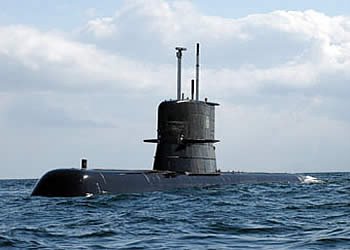
Singapore has recently signed a contract to purchase two SSK Vastergotland-class submarines from the Royal Swedish Navy with the Swedish shipbuilder Kockums AB modernizing the subs and making modifications for operation in tropical waters. These two submarines are likely to replace two of the older Challenger submarines. In service date after modification is expected to be before 2010.

Vastergotland Class Submarine

Why does country as small as Singapore need modern SSK submarines?

Both of Singapore's neighbors have submarines or plans to purchase SSKs, Indonesia has two Cakra-class Type 209 subs and Malaysia has planned to purchase two Scorpene SSKs. But the real reason is that Singapore sits at the bottom of the Malacca Strait the single biggest chokepoint in the far east for shipping traffic including oil shipments to the energy hungry industrial economies of China, Taiwan, Japan and Korea. The Phillips Channel near Singapore is only 1.5 nautical miles (2.8 km) wide at its narrowest point. Singapore's economy is dependent on this shipping with exports of an estimated $174 billion in 2004. The country's merchant marine consists of 923 ships ranging in type from bulk carriers and container ships to petroleum and LNG tankers.

The Malacca Strait has been a hotbed of piracy and Indonesia, bordering the strait, has seen Al-Qaida sponsored terrorism. These two factors also contribute to Singapore's determination to keep a strong and modern naval presence (including submarines) in the Malacca Straits. This relationship between piracy and terrorism has also prompted Lloyd's of London to treat the threat of piracy as a war risk and subsequently change its rates.

When it comes to intelligence gathering on pirate activities, there is a question on whether submarines could be a political liability in the Malacca Strait. Because all Southeast Asian nations would have to be in agreement on the use of submarines the advantage a submarine may have in it's stealth could be compromised by agreements regarding operating restrictions. Most pirates are operating out of sheltered coastal coves, a foreign submarine continually operating in a disputed territory could touch a nerve between neighboring countries.

After reading this post and comments over at Chapomatic started by commissar post at The Politburo Diktat I thought it an interesting correlation between Singapore's recent submarine purchase, it's neighbors similar ambitions and the problem of Terrorism and Piracy in the Malacca Straits.

Submarines may not be the complete answer against pirates in the Malacca Straits or the Horn of Africa but they sure could take out a terrorist mothership if needed.

Thursday, November 10, 2005

1981 – Was My Waiter a Spy?

Security and Spies seems to be a theme in my last couple of posts so I’ll continue with this line and add a sea story (personal experience) and confession to the mix.

In the fall of 1981 on my first FBM patrol aboard the USS Simon Bolivar SSBN641(G), we had an equipment causality that necessitated us pulling into port for repair. That port was Bridgetown Barbados, not a bad place to make a liberty call. On the last day in port, a group of us went to a hotel on Paradise Beach. They had a nice bar on the beach and it seemed to be the place to relax, enjoy some reggae music and drink Banks beer.

About four of us were sitting at a table just off the beach within sight of the bar. We had a few rounds before finding out that the band wasn’t going to start for an hour or so. My shipmates were getting board and had decided to take a walk down the beach to check out the bikini scenery. Being the submarine non-qual and lightweight drinker of the group, I stayed behind to finish my beer.

The friendly waiter who had been serving us that afternoon was going off shift and stopped to see if my friends were returning and if I needed anything. Then he struck up what was at first an innocent conversation. I recall it went something like this:

Waiter – “Are you from the submarine over there in the harbor?” pointing in the direction of Bridgetown.

LL – “Yes, we’ve been in port a few days for a liberty call.”

Waiter – Sits down across from me “I’ve traveled on ships but I’d like to know what it’s like being on a submarine, how long do you stay at sea?” expressing what appeared to be a general curiosity.

LL – “This is my first time at sea; we’re supposed to do around 70 days a patrol.”

Waiter – After a few are fairly long general questions he picks up the pace, “If someone gets sick, do you have a doctor on board?”, “What’s the food like?”

LL – The questions he’s asking seem to be harmless enough so I answered the best I could for someone new to submarines. “We have a corpsman to handle emergencies.”, “The food is good but you run out of fresh milk and produce about two weeks out.”

Waiter – The next two questions came fast and without pause “You’re a missile submarine do you carry the Poseidon or Trident C4?”, “What is the range of the C4 missile?”

LL – Even with a few beers in me, this stopped me in my tracks. To the first question about the type of missile we carried, I just looked at him and didn’t say anything. On the second question about the C4 Missile range, I shook my head “NO” and did not say another word.

My “friend” the waiter looked upset with my non-answer and quickly left without saying anything. Just then, my shipmates returned no longer board after a successful bikini-scouting mission.

I don’t know if I just didn’t recognize what had just happened or being new to the real Navy felt too scared to relate my five-minute conversation with a waiter to the duty officer, but I never reported it. In either case, I should have reported what had occurred.

I relate this story as a sort of lesson leaned because if that waiter was an intelligence agent I could have made a serious mistake in not reporting my unease with what had happened. I didn’t disclose classified information but, if the waiter was an agent, by reporting the incident, I could have compromised his status.

Lesser Antillies (Source: NASA)

You see that was late in 1981 and Barbados is in close proximity to Grenada. After President Reagan's 1982 visit to Barbados, he voiced a fear that Grenada, with its socialist government and proximity to Cuba, could become a Communist beachhead in the Caribbean. In October of 1983 Operation Urgent Fury was launched, after a request by the Organisation of Eastern Caribbean States (OECS), to stop the bloody seizure of power by a hard-line Marxist group in Grenada. It was believed that the Cubans were behind a government coup in Grenada and their agents had been operating for years on the islands around Grenada. Barbados was one of the island nations with great concerns about it’s neighbor's political direction.

Maybe my waiter was a spy maybe he wasn’t, but I wasn’t the one to make that determination. In any case if you’re active duty and someone is asking you questions that start off innocent but become progressively closer to what should remain unsaid be wary and let your command know of your suspicions.

Some things that seem simple or inconsequential at the time could actually mean something later on, you never know.

Sunday, November 06, 2005

Chinese Spies - Damn they're everywhere!

If you thought the old cold war Soviet KGB was the "last" big human intelligence (HUMINT) network in the world, you're sadly mistaken. The Chinese have been big into HUMINT "Spying" and continue to be in a major way. Evidence the recent arrests in Los Angeles of a Chinese intelligence-gathering ring. (hat tip: MT1(SS)). Of particular interest is that fact that the Chinese spies were caught with classified information on the new Virginia class submarine. Two blogs on my "Submariner Blogroll", have posts up on this news; Gus Van Horn here and Chapomatic here.

Chinese spies have been very active of late, lets do a little news run down:

Belgium and Greater Europe - The Telegraph, China aims spy network at trade secrets in Europe.

Canada - CBC news, Defectors say China running 1,000 spies in Canada.

Japan - The China Post, Who's spying now?

Russia - The Daily Telegraph, Official charged with spying for Beijing.

Sweden - The Local, China "suspected of spying at Swedish universities".

United States - Strategy Page, The FBI and the Chinese Spy Army.

Via the Internet 1 - NetworkWorld.com, Communist China spying via the ‘Net?

Via the Internet 2 - Australian IT, Worms do China's spying.

Via the Internet 3 - Washington Post, Hackers Attack Via Chinese Web Sites .

How difficult is it to track a Chinese national if they were involved in espionage?

According to the FBI and U.S. Immigration, cultural and economic exchange between the United States and China results in about 150,000 Chinese students studying at U.S. Universities and about 700,000 Chinese tourists and business executives visiting the U.S. each year.

China may be a valued trading partner but they don't have our interests in mind, in fact, much to the contrary.

The Media Line - IRAN LAUNCHES FIRST SPY SATELLITE (Chinese-made satellite)

Persian Journal - The Chinese Communist Party Won Iran's "Election".

The Washington Post - China Tells Congress To Back Off Businesses.

The Washington Times - China may attack Taiwan in two years: Pentagon.

Science Daily - Chavez may sell F-16 planes to China, Cuba.

The Heritage Foundation - Balancing China's Growing Influence in Latin America.

Everyone spy's, but with this much activity being reported in the press it's got me wondering, are the Chinese bad at the espionage business or is their operation so large that they can afford to have a few get caught? I'm thinking the latter....

Friday, November 04, 2005

MilBlogging With Open Source Information

There are many bloggers covering the military, some active duty, some retired, some veterans of various campaigns and conflicts. All provide varying degrees of experience and insight into previous and current events. Like journalists, in our open and free society they are exercising their right to free speech, adding to an overall discussion on defense policy and informing their readers on varying topics of interest. Unlike Journalists though the Milblogger does their writing within defined restrictions because of their current or previous service. The Milblogger also knows that if he is negligent or sloppy with his posting a fellow servicemen could be put at risk.

So here's the question:
How difficult is it to prevent writing something that, although open sourced, could compromise the security of what the Milblogger holds dear, their country and service?

Intelligence is more than covertly obtained secrets, more times than not is a mosaic of information pieced together to create a picture of the capability, direction or intent of an adversary. Collecting intelligence into this mosaic can come from a number of places, some covert; satellite imagery, signals/communication intercepts, human intel or overt such as simply reading the news and professional journals "Open Sources".

Open Sourced Intelligence
In a recent CIA unclassified paper by CIA Analyst Stephen C. Mercado titled "Reexamining the Distinction Between Open Information and Secrets" the author argues that open sources often equal or surpass classified information. He also contends that the Intelligence Community (IC) needs to assign greater resources to open source intelligence (OSINT), stating that OSINT’s share of the overall intelligence budget has been estimated at roughly 1 percent but provides anywhere from 35 to 95 percent of the intelligence used in the government.

So are Milbloggers acting as journalists or a disassociated network of OSINT collectors unknowingly aggregating information for an adversary or unfriendly nation?

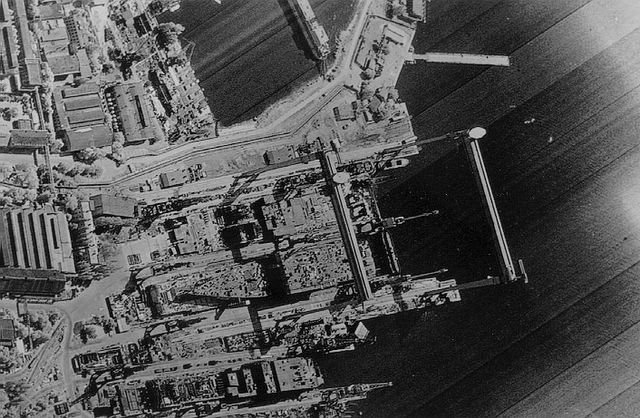
Overt and covert sources of intelligence are sometimes one in the same when leaked information makes it to the public sector. A prime example is the below K-11 spy satellite photo taken 1984 of an under-construction Soviet aircraft carrier. Later in the following year that classified photo appeared in the professional journal Jane's Defence Weekly exposing and therefore compromising a key US overhead imagery intelligence (IMINT) capability.
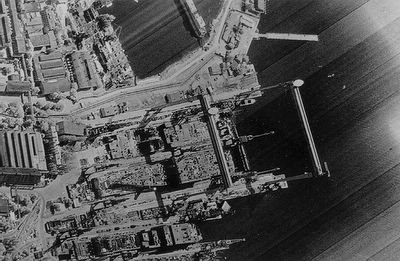
K-11 Spy Satellite Photo of Nikolaiev 444 shipyard in the Black Sea 1984.
(Public Domain Sourced: National Reconnaissance Office via Wikipedia)

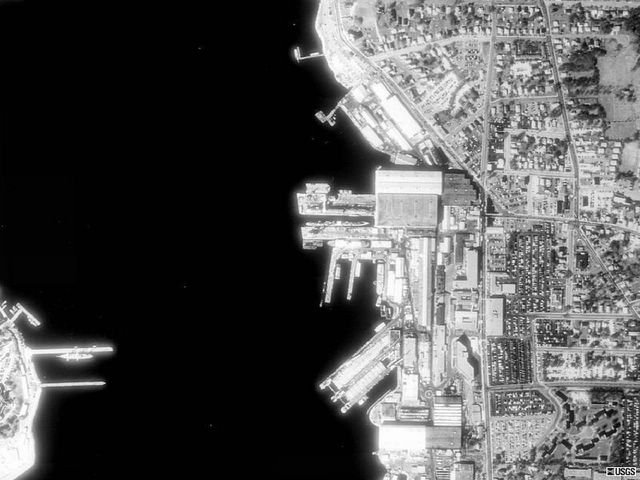
Today I can get open sourced satellite imagery approaching the 1984 K-11 leaked photo. The below image is of Electric Boat shipyard in Groton, CT where submarines are constructed. The terrserver website provides two additional levels of magnification than I posted here.
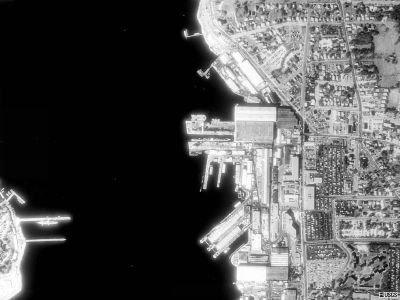
Electric Boat Shipyard- 4/1991 (Open Sourced: USGS via terraserver-usa.com)

If I annotated the above photo with additional information pertinent to a news event at the shipyard am I blogging as a journalist? What if I added some personal, though unclassified, insight into that event. Could I become an OSINT source with this additional and unique information added, probably.

Open Source Value
Mr. Mercado argues the OSINT at times provides a better value than covert intel in terms of speed, quantity, quality, clarity, ease of use, and cost. He sites bloggers as one open source that fits the better value "Open Source" criteria.

The Milblogger has a conflict here for all the things that makes his site worth reading are exactly what makes it a value as a OSINT source. In the zeal to provide interesting content, the Milblogger could cross that fuzzy line of what is of value to a reader who is not friendly. Without knowing exactly what knowledge this unfriendly reader is seeking it's impossible to defend against.

Crossing the Line into Classified Info
For many military personnel serving in Iraq and Afghanistan blogs have become a more efficient way to share the intensity of their experience. But writing about their experiences in a war zone the Milblogger has to be extra careful not to divulge tactics, techniques, system vulnerabilities, operations, methods, etc.

Milblogs have leaked classified information and the military has disciplined some service members. In August 2005, an Arizona National Guardsman on active duty in Baghdad was demoted and fined for publishing classified information on his personal blog.

The Army in particular has seen blogs as a serious "loss lips sink ships" kind of problem.

Conclusion
Aside from being difficult problem, I don't see a clear answer on how to the mitigate the risk posed by open sourced information. Our society’s freedoms are based on the free flow of ideas, apart from clearly defined state secrets; an effective model of self-censorship for Milblogs isn't available. After all even without Milblogs most of the information is open to the public, just not assembled in one place and easy to find.

Of course, other countries are far less tolerant of blogs, even one that covers a topic that has nothing to do with the military.

Update 11/9/05 22:00 : As a prime example of exercising discretion in what you post and being diligent in preventing the inadvertent disclosure of sensitive information, MT1(SS) over at Four Knots to Nowhere seems to have caught a breach. He's reporting the sensitive info is already down from the offending site. Bravo Zulu!